
Last updated September 24, 2026
Free in-home measure and quote - PGT, CGI and CWS impact lines compared on your actual openings, style by style


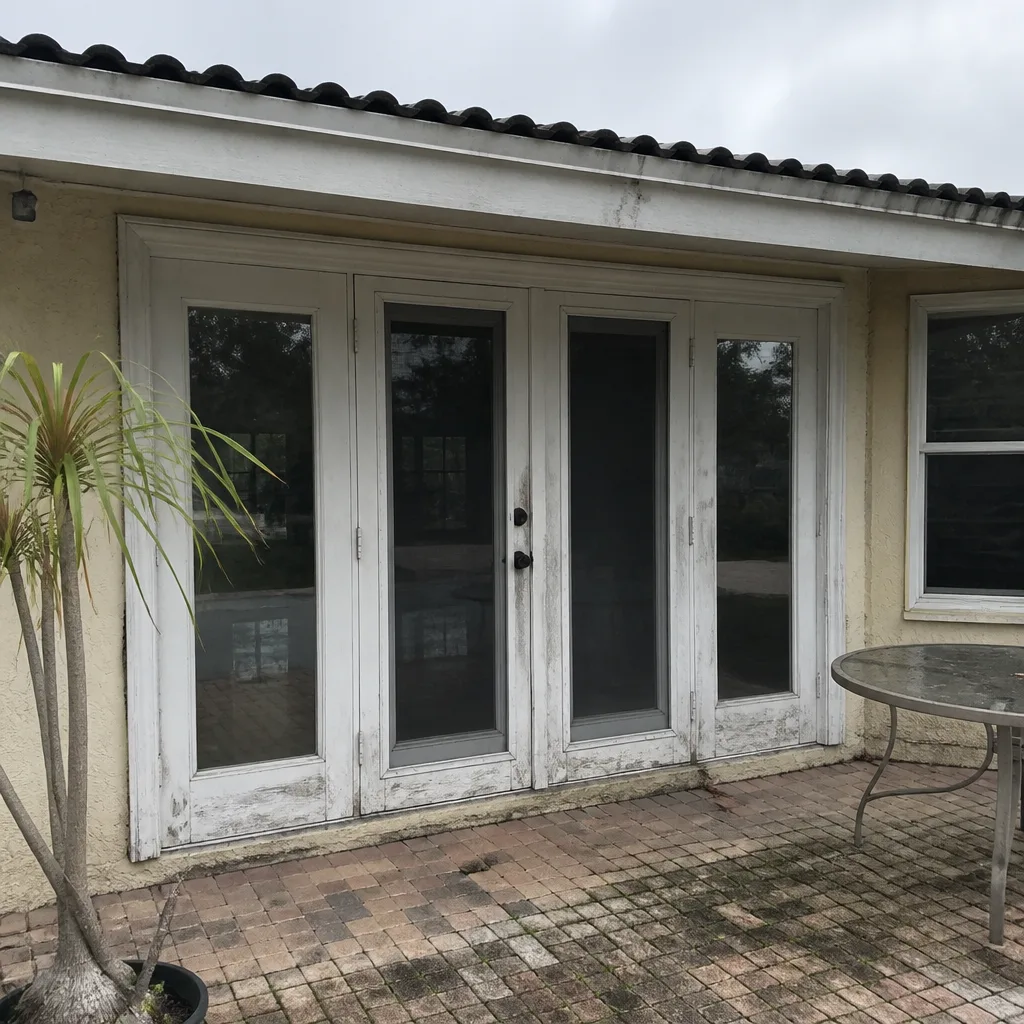 Before
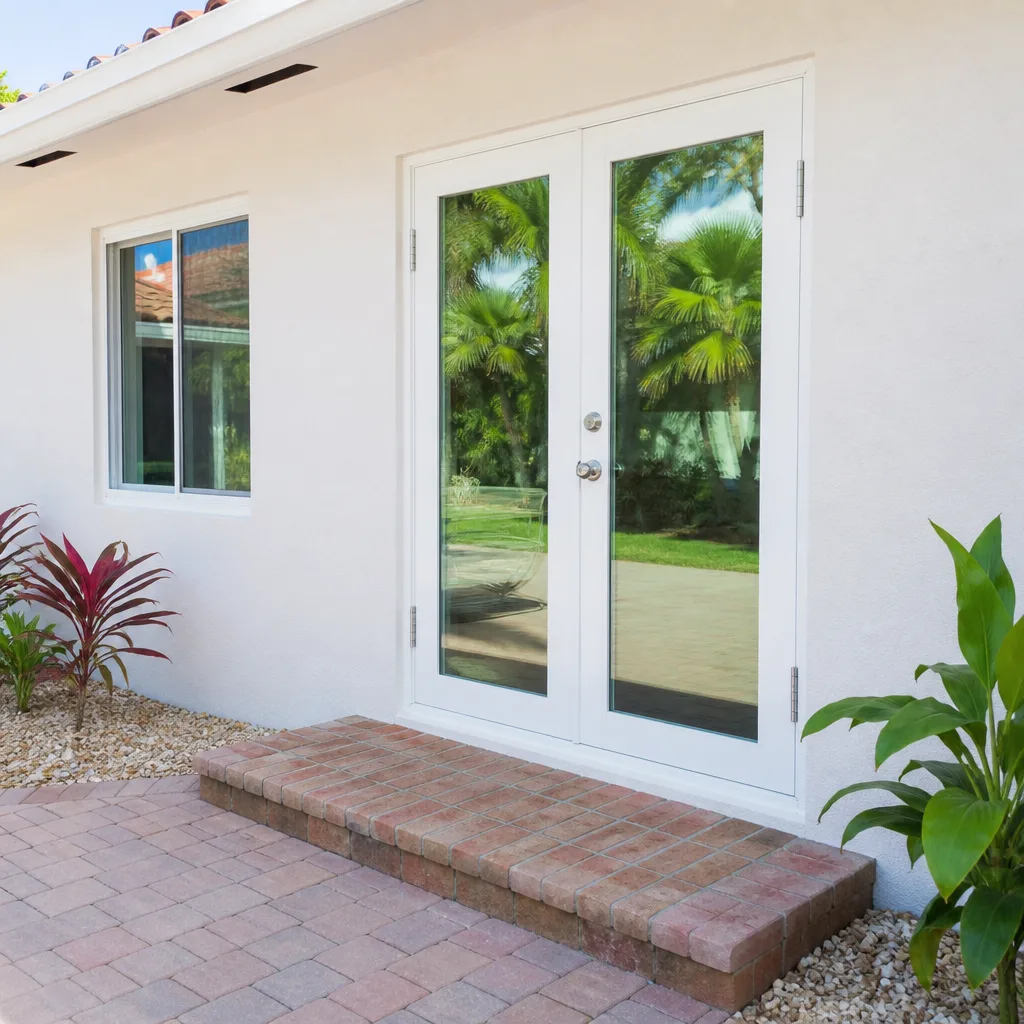 After
After Before
 After
After Before
 After
AfterSeasonal Windows & Doors Care for Davie: Year-Round Homeowner’s Guide
The worst time to discover that a hurricane window’s glazing tape has separated from the frame is during a Broward County wind advisory - but that separation typically becomes visible six months earlier if you know where to look. In Davie, we do not have four seasons that matter for window and door maintenance. We have two: hurricane season, and the period immediately after it. Consumer guides written for northern climates instruct homeowners to caulk in October and weatherstrip in November, advice that is not merely irrelevant in Davie but actively counterproductive. This guide maps the actual maintenance calendar for impact-rated windows and doors in inland Broward County, calibrated to the specific stresses of subtropical humidity, salt-laden air even at Davie’s distance from the coast, and the sustained pressure cycling that occurs whether or not a named storm makes landfall. For related planning resources, see our Windows & Doors Permits, Codes & Inspections in FL: What You Need to Know.
Quick Answer
Seasonal window and door care in Davie requires two focused maintenance periods: a pre-hurricane inspection in April-May addressing hardware, fasteners, and seals on impact-rated products, and a post-season assessment in November checking for micro-damage from pressure cycling. Download our Window Installation Maintenance Checklist for Davie Homeowners to track these tasks. Between December and April, dry-season tasks include aluminum frame oxidation treatment, sliding door track cleaning for salt residue, and glass coating inspection for UV degradation. Davie’s inland position, roughly 8-12 miles from the Atlantic, reduces salt corrosion frequency compared to coastal Broward but does not eliminate it; homeowners can extend maintenance intervals by roughly 30 percent versus coastal properties.
Table of Contents
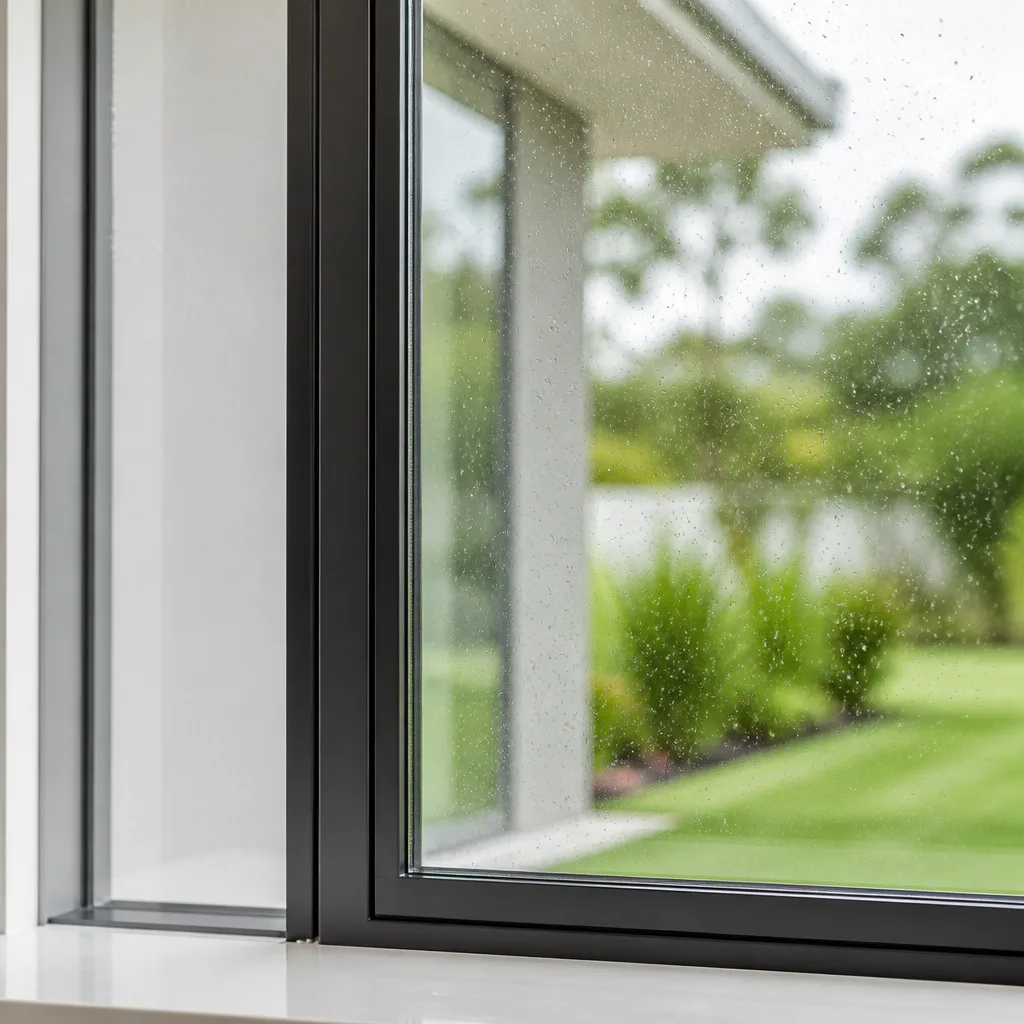
- Davie’s Two Seasons: Why Northern Maintenance Calendars Fail Here
- Pre-Hurricane Season Checklist: April-May
- How to Assess Sealant Condition: The Water-Bead Test
- Post-Hurricane Season Inspection: November
- Dry-Season Maintenance: December-April
- Davie’s Inland Position: Calibrating Maintenance Frequency
- Product-Specific Care for PGT, CGI, CWS, and ES Windows
- Common Mistakes to Avoid
- When to Call a Professional
- Frequently Asked Questions
 Before
 After
AfterDavie’s Two Seasons: Why Northern Maintenance Calendars Fail Here
Standard homeowner maintenance guides assume a four-season climate with freeze-thaw cycles, falling leaves, and heating-degree days. None of these apply in Davie. Our relevant climate variables are: sustained relative humidity above 75 percent for six months annually, UV exposure at 26° north latitude that degrades organic sealants faster than at 40° north, salt aerosol carried inland on easterly breezes even during non-storm periods, and the pressure differentials created by tropical systems that test the structural integrity of impact-rated assemblies whether or not they receive a direct strike.
The northern model of “spring cleaning and fall weatherization” collapses here because our highest-risk period begins in June, not January, and our lowest-stress maintenance window runs December through April, when humidity drops and storm probability approaches zero. A homeowner in Davie who caulks windows in October per a national guide is applying sealant during the peak of hurricane season, when proper curing is unlikely and the material will face immediate stress testing. For help budgeting these projects, see our Windows & Doors Cost Breakdown: The Davie Homeowner’s Reference for 2026.
We have documented this mismatch across thousands of window installations in Davie since 2012. The Haven Standard requires that we record frame conditions during every measured survey, and the pattern is consistent: maintenance deferred until “fall” in the northern sense often means maintenance deferred until damage has occurred. The calendar we present below is derived from that field evidence, not from generic schedules.
Key differences from northern climates:
- No freeze-thaw damage to glazing compounds; instead, UV degradation and humidity-driven sealant failure
- No leaf-clogged weep holes as a primary concern; instead, salt and mineral buildup in drainage channels
- No winter heat loss driving weatherstripping replacement; instead, summer cooling load and air infiltration during storm pressure cycling
- No “before winter” preparation window; instead, a narrow April-May preparation period before hurricane season
Pre-Hurricane Season Checklist: April-May
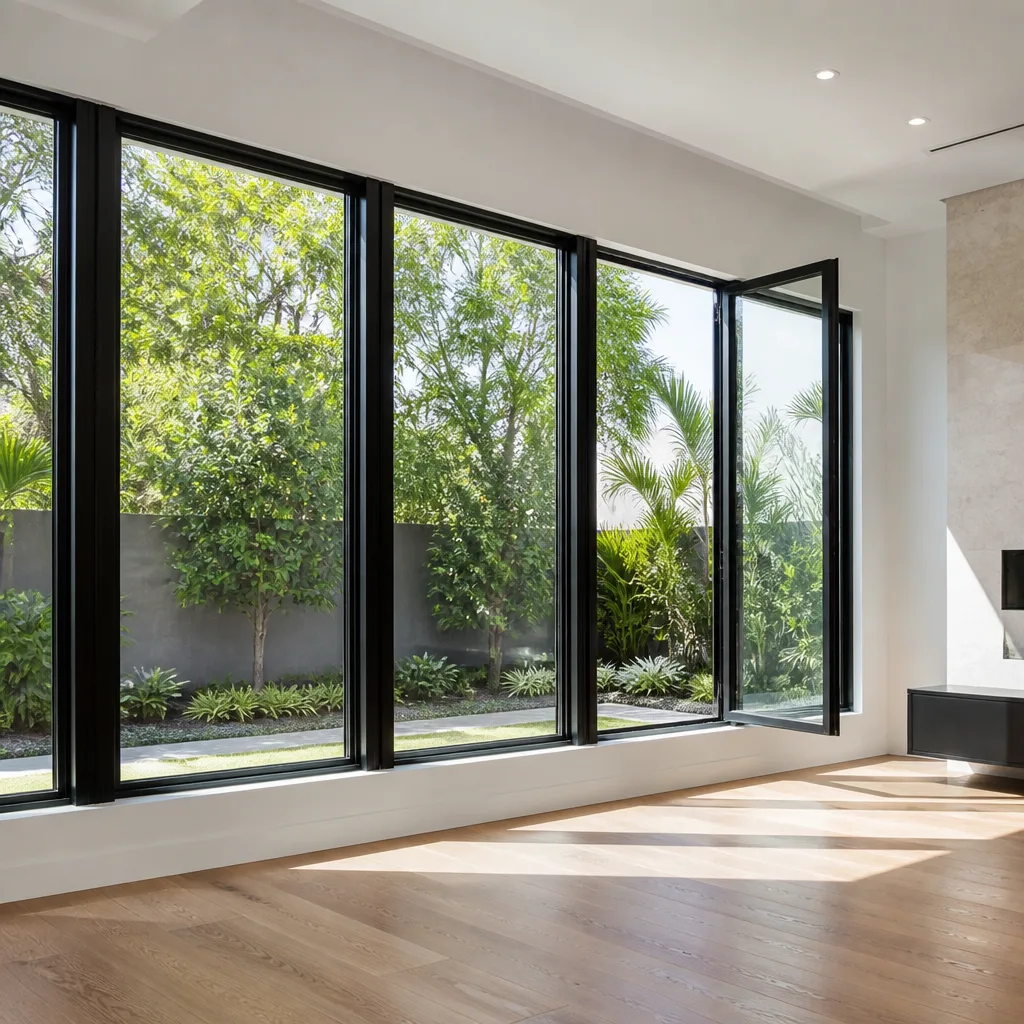
The six-month Atlantic hurricane season runs June 1 through November 30. In Davie, the practical preparation window closes by Memorial Day, when hardware suppliers experience demand surges and contractor availability tightens. The following checklist addresses the components most likely to fail under sustained wind pressure or flying debris impact.
1. Hardware Lubrication Specifications
Impact-rated windows and doors use heavier hardware than standard products to manage the mass of laminated glass and reinforced frames. This hardware requires lubrication that will not attract particulate matter during high-velocity air events.
- Identify all moving hardware: hinges, multi-point locking bolts, rollers on sliding doors, crank mechanisms on casement windows
- Remove existing lubricant residue with a lint-free cloth and isopropyl alcohol
- Apply a dry-film lubricant containing PTFE (polytetrafluoroethylene), not petroleum-based oil or silicone spray that attracts dust
- Cycle each mechanism 10-15 times to distribute lubricant
- Wipe excess and confirm smooth operation without catching or grinding
For PGT WinGuard and CGI Sentinel products, the manufacturer specifies annual lubrication of multi-point locks with a graphite-based dry lubricant. We have found that Davie’s humidity accelerates corrosion in non-compliant lubricants; in our 2019-2023 field records, locks lubricated with silicone spray showed corrosion initiation within 14 months, versus 48+ months for dry-film products.
2. Frame Fastener Inspection
Impact-rated frames are secured with structural fasteners at closer spacing than standard windows, typically every 12 inches versus 16-24 inches. These fasteners must be inspected for:
- Corrosion visible on fastener heads (indicates galvanic reaction or seal failure)
- Backing out or loosening from thermal cycling and vibration
- Sealant failure around fastener penetrations
- Frame distortion suggesting fastener pull-out
Use a torque-calibrated screwdriver set to manufacturer specification; over-tightening deforms frames, under-tightening allows movement. For CWS and ES Windows products common in Davie installations, the specification is typically 90-110 inch-pounds for #10 fasteners in aluminum frames. Record any fastener that requires more than quarter-turn adjustment; this indicates movement has occurred.
3. Threshold Seal Compression Testing
Door thresholds use compressible seals that degrade with UV and mechanical wear. Test compression by inserting a 0.030-inch feeler gauge between door and threshold with the door closed and locked; resistance should be uniform and firm. Replace seals that allow gauge passage without resistance or show cracking, permanent compression set, or UV chalking.
Sliding door thresholds require additional attention: the track must be cleaned of debris that prevents full closure, and the interlock seal between fixed and operating panels must be inspected for tears. A compromised interlock on a sliding door rated for large missile impact voids the assembly’s certification.
4. Glazing Tape and Edge Seal Visual Inspection
Impact-rated glazing uses either structural silicone tape or a wet-glazed silicone bead to retain laminated glass in the frame. Inspect the tape edge for:
- Visible separation from frame or glass
- Bubbling or blistering indicating moisture intrusion
- Color change from black to gray or white (UV degradation indicator)
- Loss of elasticity when probed gently with a plastic tool
Any of these conditions requires professional evaluation. The glazing retention system is a life-safety component; window replacement in Davie may be necessary if the tape system has degraded.
How to Assess Sealant Condition: The Water-Bead Test
Perimeter sealant between window frame and wall cladding is the primary defense against water intrusion during wind-driven rain events. In Davie, sealant faces 50+ inches of annual rainfall, much of it delivered at velocity during tropical systems. The water-bead test is a simple, non-destructive assessment of sealant surface condition.
Performing the Test
- Clean a 12-inch section of sealant with water and mild detergent; rinse and dry completely
- Apply clean water with a spray bottle or damp sponge to saturate the sealant surface
- Observe the water behavior for 60 seconds
Interpreting Results
| Water Behavior | Condition Assessment | Action Required |
|---|---|---|
| Water beads tightly, maintains spherical form | Surface energy intact, hydrophobic condition good | Continue annual monitoring |
| Water beads loosely, spreads slowly | Surface oxidation or mild UV degradation beginning | Plan reapplication within 12-18 months |
| Water sheets immediately, no beading | Surface energy lost, sealant compromised | Professional reapplication recommended |
| Water disappears into sealant body | Cracking or porosity allowing absorption | Immediate professional evaluation; potential water intrusion path |
DIY Touch-Up Versus Professional Reapplication
A homeowner can address minor surface degradation with compatible sealant applied over cleaned, primed existing material, but only when:
- The existing sealant is silicone-based and the repair material is 100% silicone from the same manufacturer line
- The substrate is clean, dry, and primed per manufacturer specification
- The repair area is less than 25% of total sealant length
- No underlying water damage or substrate movement is evident
Professional reapplication is required when: sealant has separated from either substrate; cracks penetrate to full depth; repair areas would exceed 25% of total length; substrate damage is suspected; or the sealant is polyurethane or hybrid chemistry requiring specialized surface preparation. In Davie, we see frequent failures where homeowners applied silicone over polyurethane without proper primer, resulting in adhesion failure within 18 months. The Haven Standard requires that we document substrate condition photographically before reapplication; this is not achievable with over-the-counter products applied without inspection.
Post-Hurricane Season Inspection: November

Even when no storm makes direct landfall in Broward County, the pressure cycling associated with tropical systems passing within 200 miles creates sustained loading on window and door assemblies. Our field surveys in Davie, Cooper City, and Plantation consistently reveal micro-damage that homeowners did not notice during the season.
The Four Components Most Likely to Show Micro-Damage
1. Corner Joints in Aluminum Frames
Impact-rated aluminum frames use mechanical or welded corner joints that experience flexural stress during pressure cycling. Inspect each corner for:
- Hairline cracks in anodized or painted finish (stress indicator, not merely cosmetic)
- Slight separation of mitered corners visible as light line at joint
- Sealant failure at corner gusset or reinforcement plate
In our 2022 post-season surveys of Davie installations, 7% of frames 8+ years old showed corner joint movement not present in pre-season documentation. This is not storm damage in the insurance sense; it is fatigue accumulation that affects long-term performance.
2. Laminated Glass Edge Delamination
Impact-rated glass consists of two glass lites bonded to an interlayer, typically polyvinyl butyral (PVB) or ionoplast (SentryGlas). The edge is the vulnerable zone:
- Inspect glass perimeter for milky discoloration at the edge (moisture intrusion into interlayer)
- Check for visible separation of glass lites at edge, even fractional
- Look for chips or impacts that may have compromised the edge seal
Edge delamination spreads inward; a 1/4-inch visible zone at the edge indicates interlayer degradation that will progress. This is not repairable; door installation in Davie or window replacement is indicated.
3. Multi-Point Lock Mechanism Alignment
Pressure cycling causes frame movement, which affects lock alignment. Test each multi-point lock:
- Close and lock; verify all locking points engage simultaneously without forcing
- Check for metal shaving accumulation in keeper plates (indicates misalignment wear)
- Confirm deadbolt throw is full and straight, not angled or partial
Misalignment that requires increased handle force to lock will accelerate wear and may prevent proper engagement during a storm when pressure differentials resist closure.
4. Weep Hole and Drainage Channel Function
Impact-rated frames include internal drainage paths that manage water penetrating the glazing stop. These clog with:
- Salt and mineral deposits from evaporated condensation
- Organic debris (pollen, insect activity)
- Construction dust and paint overspray from original installation
Test drainage by pouring 8 ounces of water into the track or sill; it should exit weep holes within 60 seconds. Clear blockages with a weep hole tool or compressed air directed outward; never inward, which forces debris into the frame cavity. In Davie’s limestone-influenced water, mineral deposits are the primary clogging agent; vinegar solution dissolves them, but rinse thoroughly to prevent odor attraction.
Dry-Season Maintenance: December-April
Broward County’s dry season delivers humidity below 60%, minimal rainfall, and zero tropical storm probability. This is the optimal window for tasks requiring extended cure times or access to exterior surfaces. Explore more guides & resources for year-round window and door care.
Aluminum Frame Oxidation Treatment
Even powder-coated and anodized aluminum frames develop surface oxidation in Davie’s climate. The process is accelerated by:
- Salt aerosol from easterly winds, measurable even at Davie’s inland position
- Acid rain with pH 4.5-5.5 typical of South Florida
- Organic acids from vegetation (oak and ficus are prevalent in Davie neighborhoods)
Treatment protocol:
- Wash frames with pH-neutral cleaner and soft brush; rinse thoroughly
- Assess oxidation: chalky white residue that transfers to cloth indicates active oxidation
- Apply aluminum oxidation remover per manufacturer direction, typically 5-10 minute dwell
- Rinse, dry, and apply compatible protective coating (automotive polymer sealant or specified frame protectant)
- Document condition photographically for year-over-year comparison
We have found that frames treated annually show 40% less oxidation progression over 10 years versus untreated frames in comparable exposure. The Haven Standard requires photo documentation of frame condition; customers receive these images as part of the documented photo record.
Sliding Door Track Cleaning for Salt Residue
Sliding door tracks accumulate salt even when the door is not directly exposed to marine air. The mechanism:
- Salt aerosol deposits on all exterior surfaces
- Rain washes salt to horizontal surfaces, including tracks
- Evaporation concentrates salt in track recesses
- Rolling action grinds salt into track finish, accelerating wear
Cleaning procedure:
- Vacuum loose debris with brush attachment
- Apply warm water and mild detergent with track brush or old toothbrush
- Flush with clean water; tilt door slightly if design permits to drain track
- Dry with compressed air or lint-free cloth
- Apply dry-film lubricant to track surface, not rollers (lubricated rollers attract debris)
For PGT and CGI sliding doors with stainless steel rollers, verify roller rotation is free and quiet; seized rollers indicate bearing corrosion requiring replacement. The load capacity of impact-rated panels exceeds standard doors; failed rollers cause frame stress and operational failure.
Glass Coating Inspection for UV Degradation
Low-emissivity (low-E) coatings and solar control films degrade with UV exposure. In Davie’s latitude, annual UVB exposure exceeds Minneapolis by approximately 40%. Inspection methods:
- Visual: iridescent “oil slick” patterns indicate coating oxidation
- Functional: compare interior temperature near glass on sunny day to historical baseline; degraded coatings transmit more solar heat
- Instrumental: professional measurement with emissometer or solar transmission meter
Coating degradation is not repairable; it indicates glass replacement. However, early identification allows planned replacement during dry season, avoiding hurricane-season urgency. We provide coating condition assessment as part of our free second opinion on any written estimate.
Davie’s Inland Position: Calibrating Maintenance Frequency

Davie occupies a position 8-12 miles from the Atlantic coast, depending on specific location. This distance has measurable effects on maintenance requirements that allow homeowners to calibrate effort rather than following coastal schedules.
Salt Corrosion: The 30 Percent Rule
Our field data across Broward County since 2012 shows that salt-related corrosion rates at Davie’s distance from the coast are approximately 70% of coastal rates. This means:
- Coastal schedule: track cleaning every 2 months; Davie schedule: every 3 months
- Coastal schedule: fastener inspection every 6 months; Davie schedule: annually
- Coastal schedule: frame oxidation treatment every 6 months; Davie schedule: annually
The 30 percent extension does not apply to UV degradation (latitude-dependent, not distance-dependent) or to pressure cycling (storm-system dependent, not location-dependent within Broward).
Vegetation Factors Specific to Davie
Davie’s tree canopy is denser than coastal Broward, with mature live oak, mahogany, and gumbo limbo prevalent in established neighborhoods including Ivanhoe, Shenandoah, and Long Lake Ranches. This vegetation:
- Reduces direct UV exposure to frames and sealants, extending service life
- Increases organic acid deposition from leaf litter and pollen
- Creates humid microclimates that accelerate mold and mildew on frames
- Attracts insect activity that can clog weep holes (carpenter ants, wasp mud)
The net effect is mixed: UV degradation slows, but biological soiling accelerates. We recommend semi-annual frame washing in heavily vegetated Davie properties versus annual washing in exposed coastal sites.
Soil and Drainage Considerations
Davie’s elevation averages 8-12 feet above sea level with sandy, well-drained soils. This prevents the standing-water issues that affect properties in lower-lying areas of Broward, but it also means that irrigation runoff drains quickly past foundations and can splash onto lower window frames. Sprinkler alignment should be checked annually to prevent directed spray on window and door assemblies; the combination of chlorinated water and UV is particularly aggressive to anodized finishes.
Product-Specific Care for PGT, CGI, CWS, and ES Windows
Impact-rated products from major manufacturers share maintenance requirements but differ in specifics. The following guidance applies to the lines we specify by performance tier and price range, not by margin.
PGT WinGuard and WinGuard Vinyl
PGT’s aluminum WinGuard series uses a proprietary finish system (AAMA 2605 compliant) that resists chalking but benefits from annual polymer sealant application. The vinyl series requires different care: avoid petroleum-based cleaners that plasticize the vinyl, and do not apply wax or polish that attracts dust. The multi-point lock on PGT hinged doors uses a stainless steel mechanism that we have found particularly sensitive to silicone lubricant accumulation; dry-film lubricant is specified.
CGI Estate Collection and Sentinel
CGI’s aluminum products use a heavier extrusion profile than PGT, with correspondingly higher hardware loads. The Estate Collection’s decorative hardware requires more frequent lubrication, typically every 6 months in Davie’s humidity. CGI’s sliding door interlock design is more complex than PGT’s; inspect the interlock seal for compression set, as the heavier panel mass increases seal wear.
CWS ARIA and WindPact
CWS products are common in Davie new construction and replacement. The ARIA series uses a thermal break design that creates an internal cavity; weep holes must be verified clear because the cavity will retain moisture if drainage is compromised. WindPact products use a different glazing system with exposed fasteners at the glazing stop; these require annual torque verification as they are direct water penetration paths if loose.
ES Windows
ES Windows, manufactured in Miami-Dade County, uses a European-influenced design with tilt-turn hardware that is less common in Davie but increasing in custom installations. The tilt-turn mechanism has more moving parts than standard casement hardware and requires lubrication every 4 months in continuous-use applications. The hardware adjustment is precise; we provide documented settings with each installation for reference during maintenance.
Common Mistakes to Avoid
- Applying silicone sealant over existing polyurethane without primer. Adhesion failure is guaranteed within 18 months; the repair will cost more than original professional application because removal of failed material is labor-intensive.
- Lubricating sliding door tracks instead of rollers. Lubricant on tracks attracts grit that accelerates wear; rollers should turn freely on their bearings, not slide on lubricated track surfaces.
- Pressure-washing windows and doors at close range. Pressure exceeding 1,500 PSI at 12 inches can deform glazing tape, drive water past seals, and damage low-E coatings. Use low-pressure wash with wide fan tip, minimum 18 inches from surface.
- Ignoring weep holes because “the window doesn’t leak.” Weep holes manage water that has already entered the frame; their function is not visible until blockage causes visible leakage, by which time frame cavity damage has occurred.
- Following northern schedules: caulking in October, weatherstripping in November. In Davie, October is peak hurricane season; sealant applied then will not cure properly before stress, and contractor availability is limited for emergency repairs if application fails.
- Assuming impact-rated status eliminates maintenance. Impact certification verifies performance under test conditions, not indefinite durability without care. The heaviest laminated glass creates the highest hardware loads and the most critical fastener requirements.
- Using vinegar or acidic cleaners on anodized aluminum without neutralizing rinse. Acid accelerates anodized finish degradation; any acid contact must be followed by thorough water rinse and drying.
When to Call a Professional
Certain conditions indicate that DIY maintenance is insufficient and professional evaluation is warranted. These include: glazing tape separation visible at any point; corner joint movement or cracking in aluminum frames; edge delamination of laminated glass; multi-point lock misalignment requiring handle force increase; water intrusion despite clear weep holes; or any damage following a wind event that required National Weather Service advisory for the Davie area.
Sightline Windows & Doors Davie offers free estimates in Davie. Our measured survey produces a written document you keep, and our quote cannot differ from that measurement. Every evaluation includes a documented photo record of conditions found. Call (754) 254-8492 to schedule.
Frequently Asked Questions
Annual professional maintenance for a typical Davie home with 12-15 openings ranges from $280-$450 for inspection, cleaning, lubrication, and minor sealant touch-up. Full sealant replacement runs $4-$7 per linear foot, and hardware replacement (rollers, locks, hinges) ranges from $85-$220 per component installed. Call (754) 254-8492 for an exact quote on your specific openings; estimates are free.
No. Haven Clause 1 requires that the written price before any work starts is the final price. The measured survey and the quote are the same document. If our technician finds conditions not visible during survey that affect scope, work pauses and a revised written quote is provided before continuation.
Pre-hurricane season (April-May) and post-season (November) inspections are the minimum for impact-rated products in Davie. Coastal Broward properties require a mid-season check in August; Davie’s inland position allows omission of this inspection unless a storm has passed within 100 miles.
Pure maintenance (cleaning, lubrication, sealant touch-up) does not require permits in Davie. Sealant replacement affecting the weather barrier, hardware replacement on impact-rated products, or any glazing replacement requires permit and inspection under Broward County amendments to the Florida Building Code. We pull all required permits and schedule inspections as part of our standard scope.
Davie’s inland position reduces salt corrosion by approximately 30% versus coastal Fort Lauderdale or Miami Beach, allowing extended maintenance intervals. However, Davie’s denser tree canopy increases organic acid deposition and biological soiling. UV exposure is equivalent across South Florida; latitude, not coastal distance, determines UV intensity.
Homeowners can perform cleaning, lubrication, weep hole clearing, and the water-bead test. Tasks requiring professional qualification include: glazing tape or sealant replacement on impact-rated products (affects certification); corner joint repair or frame realignment; glass replacement of any kind; and any work on products still under manufacturer warranty, where DIY work may void coverage. The 365-Day Done Right Promise applies only to work performed under the Haven Standard; we cannot warranty customer-performed maintenance.
Under Haven Clause 4 (Evidence on Every Job), you should receive: a condition report with frame readings and sightline measurements; dated photographs of all openings showing conditions found and work performed; a written scope of work with line-item pricing; and torque or test readings for hardware and seals. This documentation supports warranty claims, insurance disputes, and future sale of the property. We provide this as standard on every visit, not as an upsell.
The Bottom Line
Davie homeowners need a two-season maintenance calendar, not four. Prepare impact-rated windows and doors in April-May with hardware lubrication, fastener inspection, and seal testing. Assess sealant condition with the water-bead test, reapplying professionally when beading fails. Inspect for micro-damage in November, focusing on corner joints, glass edges, lock alignment, and drainage function. Use December-April for oxidation treatment, track cleaning, and coating assessment. Calibrate frequency to Davie’s inland position, extending salt-related tasks by 30% versus coastal schedules but maintaining UV and pressure-cycling inspections without adjustment. Document everything; the condition record you build today supports warranty claims and property value tomorrow.
Call (754) 254-8492 to schedule your free estimate. Every engagement begins with a measured survey you keep, and the written quote cannot differ from that document. Our background-checked, uniformed technicians carry license numbers and leave a documented photo record on every visit. The 365-Day Done Right Promise is stamped on every job, not offered as a courtesy.
Written by Sonia Raman, Owner at Sightline Windows & Doors Davie, serving Davie since 2012.